Home insurance in British Columbia often covers sudden and accidental water damage, and it often does not cover water that got in slowly or from the outside. A burst supply line, a failed washing machine hose, or a pipe that lets go overnight is the kind of loss many policies are written for. A drip that has been staining a ceiling for months, groundwater in a crawl space, or overland flooding after a heavy rain is a different question, and a lot of Langley homeowners find that out at the worst time.
What water damage insurance usually pays for
Sudden escape of water from a plumbing system or an appliance is the claim adjusters see most often in Langley. The pipe bursts, the dishwasher supply lets go, the hot water tank fails, and water is on the floor within minutes. If your policy includes that peril, the restoration work to dry the structure and repair the resulting damage is commonly part of the claim. You still have a deductible, and you still have a duty to stop the damage from getting worse.
That duty to mitigate is not a suggestion. Insurers expect you to shut off the water, protect undamaged contents, and get extraction and drying started. Waiting a week because you hoped it would dry on its own can turn a covered water loss into a mold problem that the policy treats differently, or that it declines because the extra damage came from delay.
What is often excluded
Gradual leaks, seepage, and wear are the exclusions that surprise people. If a supply line has been weeping into a wall cavity for months, the insurer may call it a maintenance issue rather than a sudden loss. The same thing happens with failed caulking, a deteriorated roof that has been leaking through several storms, and a sump that was never maintained.
Overland water is the other big one. Water that enters from the surface during a storm, a creek, or a blocked storm drain is not the same as a burst pipe. Many BC policies only cover that if you bought overland flood coverage as an endorsement. Sewer backup is similar. A toilet or main line that backs up into the basement is often covered only when sewer backup coverage is on the policy. Read the wordings, or ask your broker, before you assume a flood in the basement is automatic.
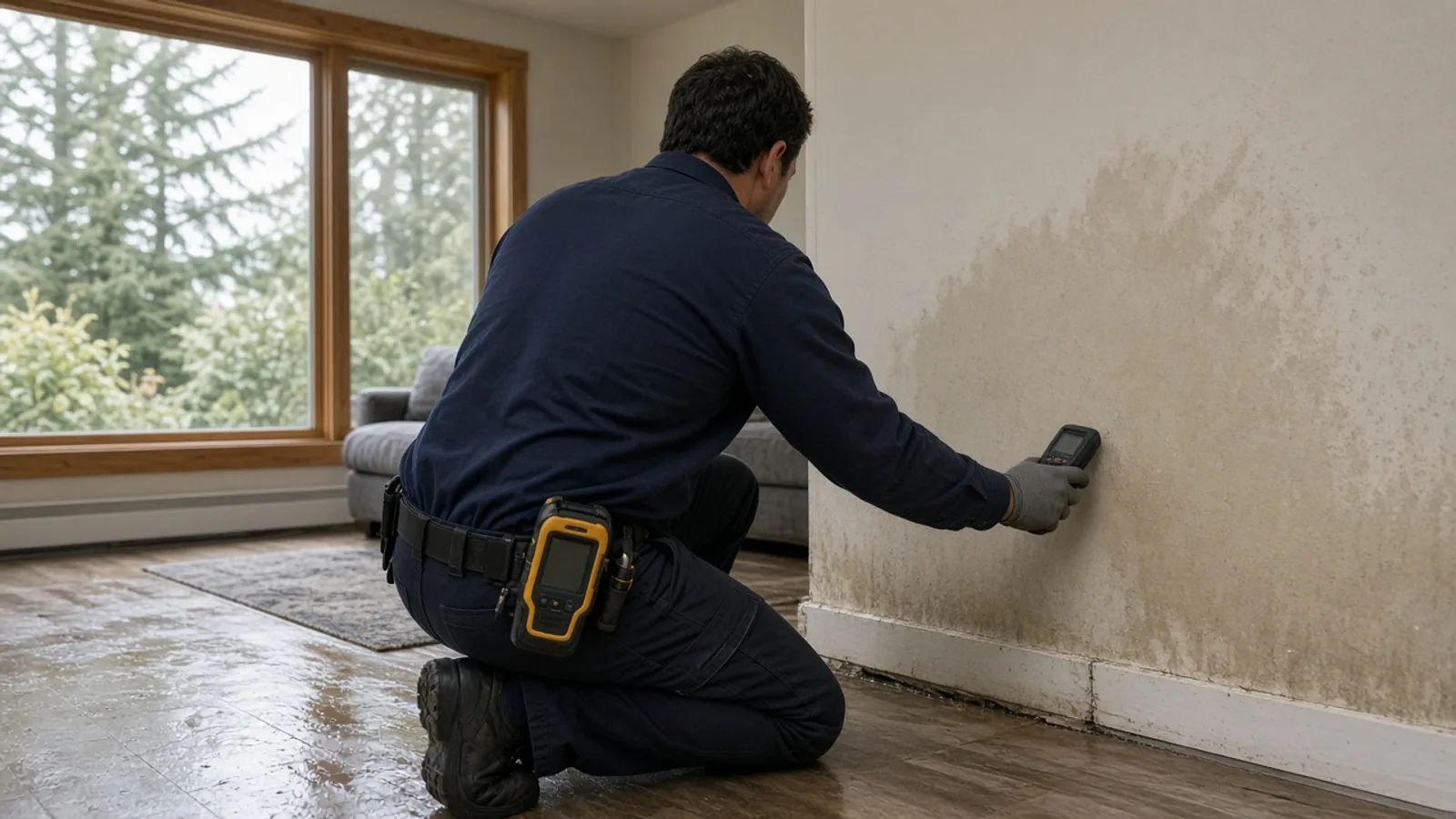
We are a water damage restoration company, not your insurer. We do not decide coverage. What we do is document the loss so the adjuster can. Moisture readings, photos, a written scope, and a drying log give the claim a record of what was wet, what was removed, and when the structure returned to a dry standard.
How to open a water damage claim without losing ground
Call the insurer early and tell them what happened in plain language. Say where the water came from if you know, when you noticed it, and what rooms are affected. Photograph the source and the damaged areas before demolition, then let the restoration crew open walls where the meters say they need to be opened. Guessing, and tearing out half the house before anyone has looked, makes the claim harder, not easier.
Ask the adjuster whether sudden water escape, sewer backup, and overland water are on your policy, and what your deductible is. If they assign a preferred vendor, you can often still choose your own restoration company. In Langley we work alongside adjusters regularly, and we send the assessment and the daily moisture logs they ask for.
What to do tonight if water is in the house
Stop the source, keep people away from sagging ceilings and wet electrical, and call for emergency water removal. Then call your insurer. The order matters because every hour of standing water adds saturation to subfloors and cavities, and that is the damage you are trying to keep off the claim. If you are in Langley or the Lower Mainland, call 604-332-0886 and we will start the assessment and the extraction while you get the claim number.