Mold can begin growing within 24 to 48 hours after water damage, and visible colonies often show up by the second or third day if the materials stay wet. That timeline is why water damage restoration in Langley is treated as an emergency, not a weekend project. Spores are already in the air of almost every house. They only need moisture, a food source such as drywall paper or wood, and a bit of time.
The mold growth timeline after a flood or leak
In the first few hours, you usually will not see mold. What you will see is wet carpet, stained drywall, a soft ceiling, or a musty smell that was not there yesterday. The water is already moving into wall cavities, underlay, and insulation, which is where mold prefers to start because those spaces stay damp and dark.
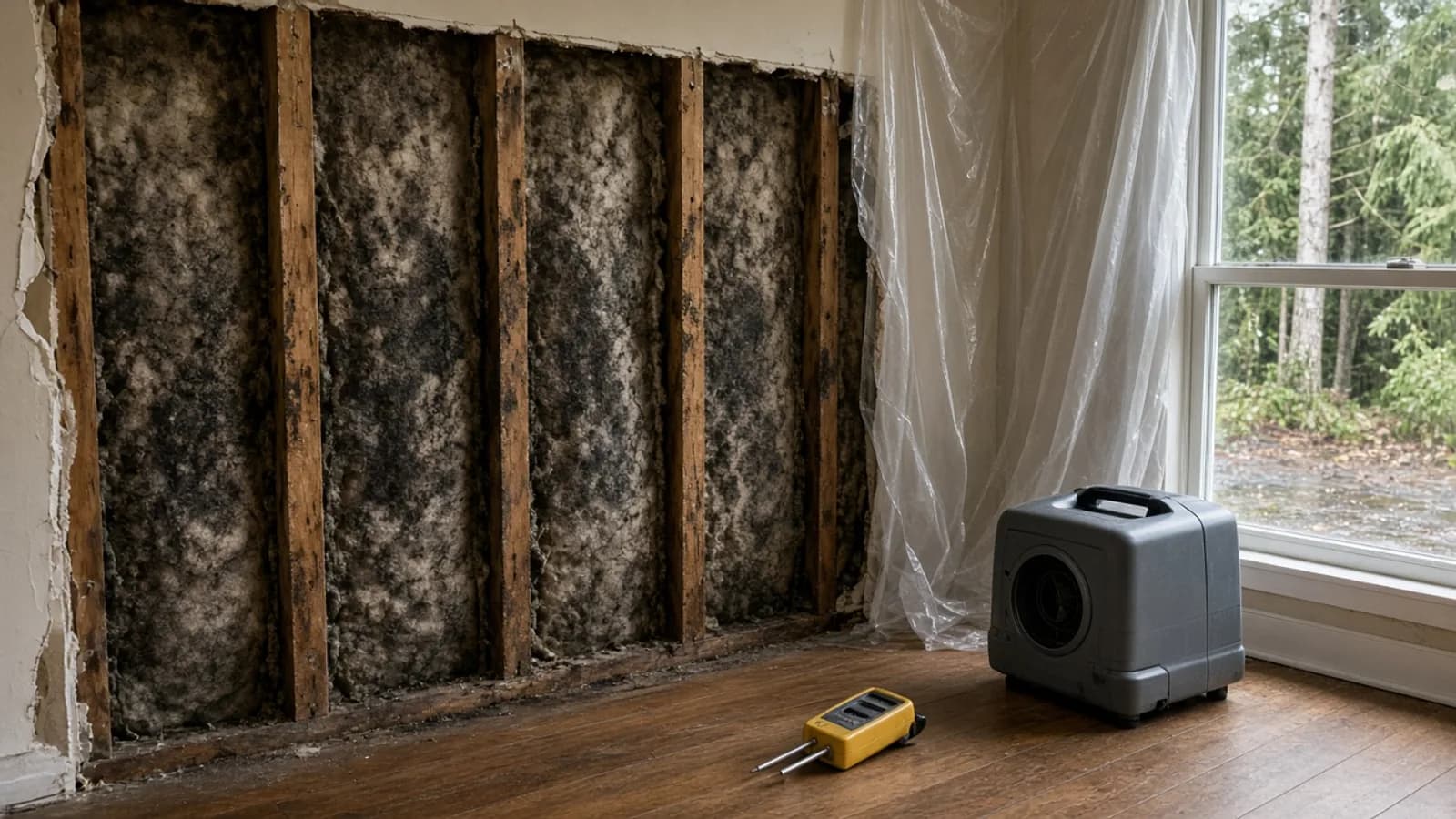
Between 24 and 48 hours, mold can colonize wet porous materials. You may still not see a black patch on the painted face of the wall. Growth often starts on the back of the drywall, on the paper facing of insulation, and on the surface of studs. By day three, a closed room that was never dried with commercial equipment can have an obvious musty odour, and by the end of the first week that growth can be established enough that wiping the surface does nothing useful.
Langley's climate makes the clock shorter, not longer. Homes stay closed through long wet winters, indoor air does not dry a soaked wall on its own, and a slow leak behind a dishwasher can sit for days before anyone notices the floor. If the materials are still wet at the 48 hour mark, you are no longer looking at a simple water damage cleanup. You are looking at drying plus mold remediation.
Why the surface can look fine while mold is already growing
Painted drywall hides a lot. Water from a burst pipe or a ceiling leak wicks sideways and downward, then sits in the cavity long after the puddle on the floor is gone. Household fans move air across the face of the wall. They do not pull moisture out of insulation or the back of the gypsum. That is the gap that turns a contained leak into a mold problem two weeks later.
A proper water damage assessment uses a moisture meter and, where the migration is unclear, thermal imaging. Those readings tell you which sections are actually wet, which ones can be dried in place, and which ones have to come out. Guessing from the stain on the paint is how cavities get closed up wet.
What actually stops mold after water damage
Speed and dryness stop mold. Standing water needs to come out with extraction equipment, wet porous materials that will not dry in time need to come out, and the remaining structure needs commercial dehumidifiers and air movers until the readings are back to a dry standard. Painting over a stain, running a box fan overnight, or spraying a store-bought cleaner on the surface does not do that job.
If mold is already visible, or if wet drywall has been sitting for more than a couple of days, the work shifts into mold remediation. That means containment, removal of affected materials, HEPA filtration, and cleaning of the framing before anything is rebuilt. Our mold remediation crew in Langley treats that as part of the same water damage restoration, not a separate surprise at the end.
What to do in the first day
Stop the source if you can do it safely. Shut off the water, stay out of rooms with wet ceilings that are sagging, and do not energize outlets that got soaked. Call your insurer to open a claim if the loss looks sudden, and call a water damage restoration company so drying starts before the 24 to 48 hour window closes. Take photos of the standing water and the damaged materials before anything is moved, then leave the demolition and the drying plan to people with meters.
If you are already past that window and the room smells musty, do not wait to see if it goes away. Call 604-332-0886. We will map the moisture, tell you what has to come out, and dry what can still be saved.