Water damage restoration in Langley commonly runs from a few thousand dollars for a contained clean-water leak to well into five figures when a finished basement, sewage, or structural cavities are involved. There is no honest flat price, because the invoice follows the amount of water, the materials it reached, and whether the water was clean or contaminated. Anyone who quotes a number from a text message without seeing the loss is guessing.
Typical cost ranges we see on Langley jobs
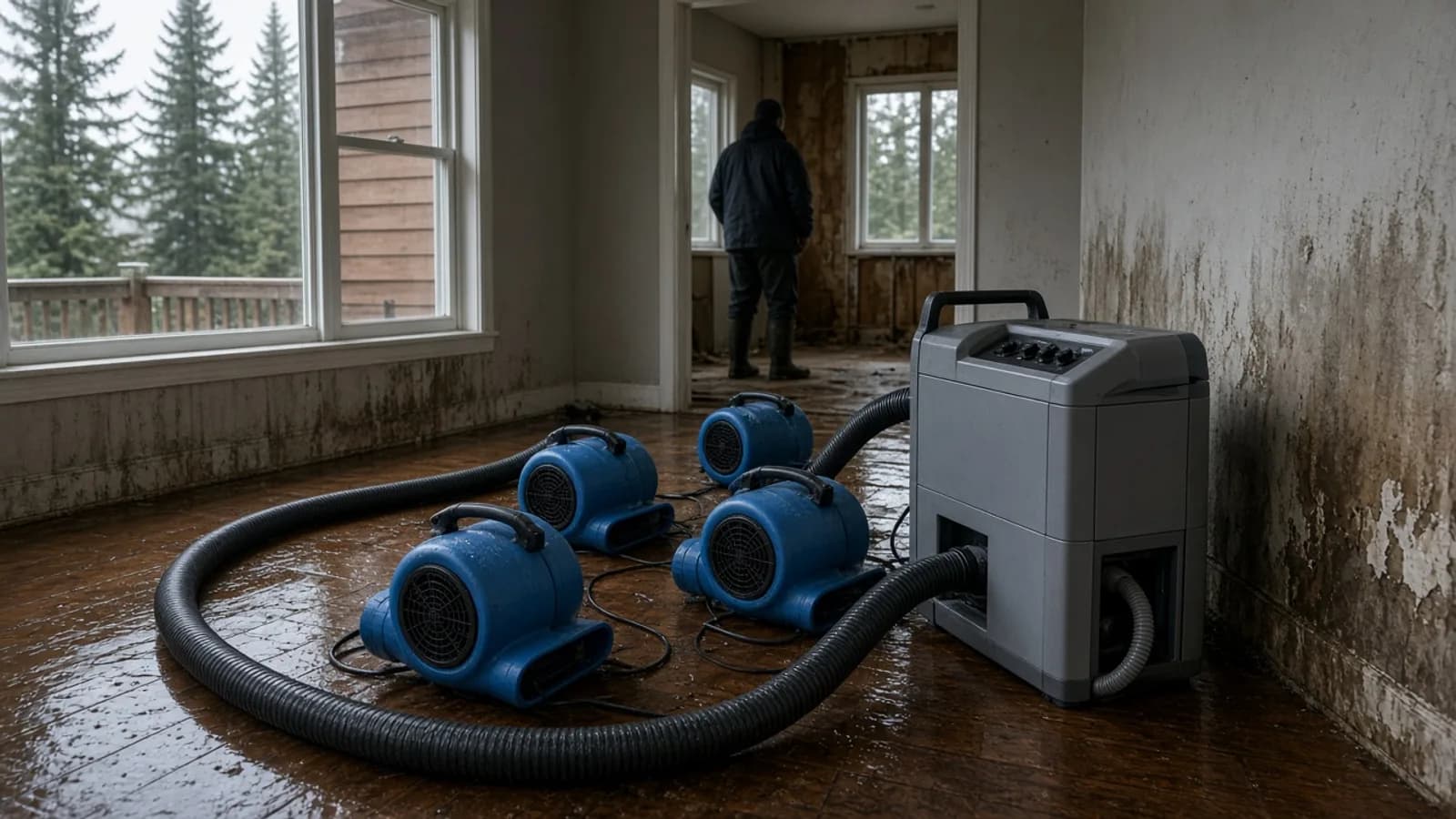
A small clean-water loss that stays in one room, such as a supply line under a sink that is caught the same day, often lands in the range of about $1,500 to $4,000. That usually covers extraction if there is standing water, air movers, a dehumidifier, moisture monitoring, and limited removal of wet baseboard or the bottom of the drywall.
A finished basement flood, a ceiling that has to be opened across more than one room, or flooring and subfloor that are saturated, more often falls between about $4,000 and $12,000. The jump comes from demolition, disposal, more equipment, more days of drying, and the rebuild of drywall, insulation, and flooring after the readings are dry.
Sewage, a long-neglected leak with mold, or a loss that has reached multiple floors can move past that range. Contaminated water means containment, protective equipment, disposal of porous materials, and disinfection before drying even starts. Those steps are not optional, and they are why a sewage cleanup costs more than a clean burst-pipe job of the same size.
What changes the price
Category of water is the first lever. Clean water from a supply line is cheaper to handle than grey water from a washing machine, and both are cheaper than black water from a sewer backup. Class of loss is the second lever. Water on the surface of a floor is a smaller drying job than water inside walls, under a subfloor, and in a crawl space.
Time is the third lever. If we get there the same day, a lot of materials can be dried in place. If the drywall and insulation have been wet for several days, more of it has to be removed, and mold remediation gets added to the scope. That is usually the most expensive delay a homeowner can make.
Access and finishes matter too. A crawl space under a mobile home, a strata unit with a neighbour below, or custom hardwood that might be saved with a careful dry all take different labour than a bare concrete basement. We price from the moisture map, not from the size of the puddle you can see.
Why a cheap dry often costs more later
Household fans and a wet-vac from the hardware store can make a room look better by the next morning. They do not tell you if the cavity is dry. Closing the wall, or laying new flooring, over a wet assembly is how people pay for the same job twice, once for the cosmetic fix and again for the mold that shows up after.
A proper restoration includes daily moisture readings and equipment that stays until those readings say the structure is dry. The monitoring is part of the cost because it is the part that keeps the claim, and the house, from growing a second problem. We also write it down so your insurer can see why each step was taken.
How to get a real number
Tell us what happened, which rooms are wet, and whether the water came from a supply line, an appliance, a drain backup, or from outside. If it is safe, photos help. Then we come out, meter the affected areas, and give you a scope before work proceeds. For an active leak or a flood in Langley, call 604-332-0886. Waiting for a perfect written estimate while water sits in the floor is the expensive choice.