Basement restoration does not finish the day the puddle is gone. On a typical finished basement in Langley, standing water comes out the same day, structural drying runs three to five days, and rebuild starts only after moisture readings on the slab, studs, and remaining drywall are back to a dry standard. Sewage, soaked insulation, or a slab that drank the water can push that past a week before anyone hangs new board.
Timing for a basement still starts with the Langley restoration crew getting the water out the day you call.
Day one is extraction, not a rebuild
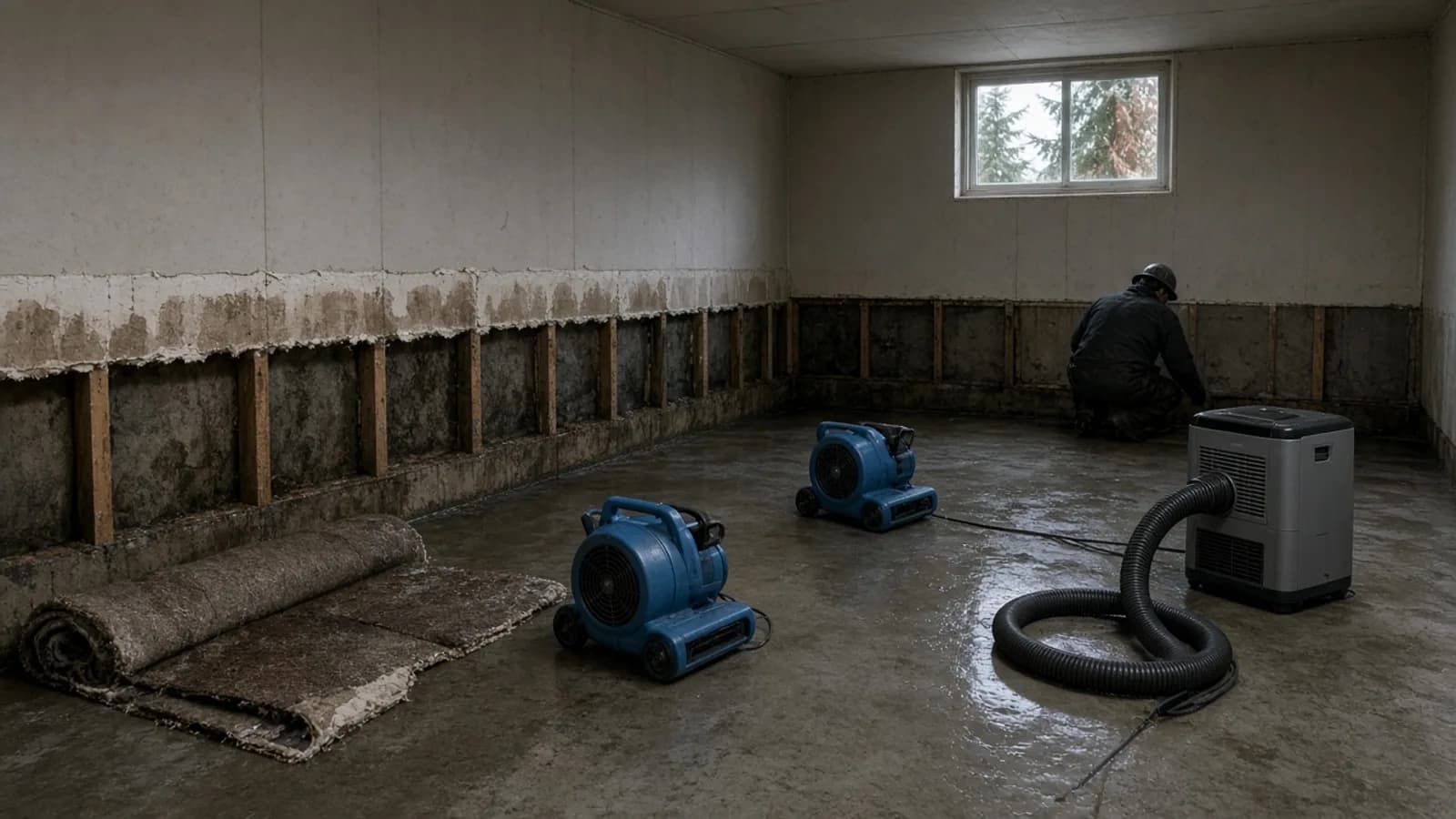
The first visit is about getting the water out and finding where it went. A finished basement hides a lot of it under laminate, behind baseboard, and in the bottom of the wall. We map those spots with a moisture meter, pull saturated carpet and underlay, and extract what is still standing. If the water came up a floor drain or out of a bathroom, that is a different cleanup from a clean supply-line leak, and porous materials that touched it usually come out the same day.
Air movers and an LGR dehumidifier go in once the bulk water is gone. They are not a box fan in the doorway. A basement stays cool and closed, especially through a Langley winter, and indoor air will not dry a concrete slab or a wet stud bay on its own.
Why three to five days is the common drying window
Drywall edges, wood studs, and the surface of a slab give up moisture at different speeds. The room can look fine on day two and still read wet in the cavity. We leave the equipment until the readings drop and stay down, which on a contained clean-water loss is often three to five days. A thicker slab, a cold basement, or water that sat overnight before anyone called will take longer.
Pulling the machines early because the floor looks dry is how the musty smell shows up in week three. The drying log is the record your insurer sees, and it is the reason we do not guess the end date from the colour of the concrete.
What stretches the job past a week
Sewage and drain backups add cleaning and disposal before drying even counts. Insulation behind the wet wall rarely dries in place, so the lower drywall comes off, the batts come out, and the framing has to dry open. Laminate and a swollen subfloor add another layer. None of that is a same-week paint job.
Rebuild is the last step, not the first. New drywall, insulation, baseboard, and flooring go in after the structure is dry. Closing a wall because a guest is coming on the weekend traps the moisture we just spent days pulling out. If you are looking at a flooded basement in Langley, Walnut Grove, Willoughby, or Aldergrove, call 604-332-0886 and tell us how deep the water got and whether it came from a pipe, an appliance, or a drain.