The first 24 hours after water damage are the difference between drying what you have and replacing it. Water moves into drywall, underlay, and insulation while you are still looking for towels. In a closed Langley house, that moisture does not leave on its own. Mold can start on those materials within 24 to 48 hours, which is why water damage restoration in Langley is an emergency response, not a Monday appointment.
If the water is already through more than one room, the Langley water damage restoration crew should be the next call, not another fan.
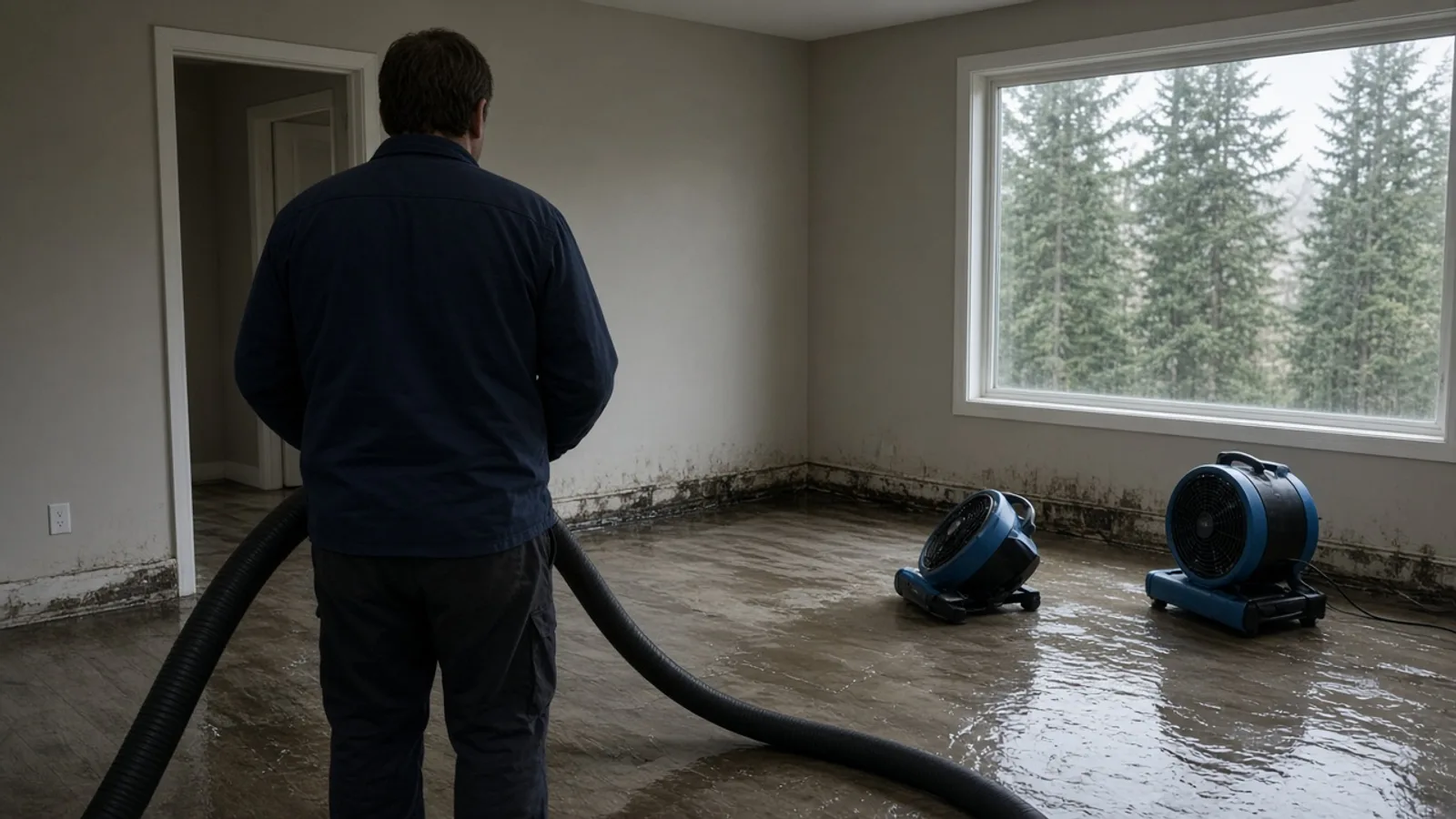
The first hour: stop the water and stay safe
Find the source if you can do it without standing under a soft ceiling or in water that has reached outlets. A supply line, a toilet, a washing machine hose, and a water heater all have a shutoff. If you cannot find it, shut the main. Do not flip breakers while you are standing in the water, and do not use a wet vacuum on a floor that is still energized.
If the water came up a floor drain, out of a toilet, or in from the street, treat it as contaminated. That is sewage cleanup or flood water, not a clean-water mop. Keep kids and pets out of the room. Open a window if the air is safe, then stop there. Household fans will not dry a wall cavity.
What to photograph before anything is moved
Insurers want the scene before demolition. Take wide photos of each wet room, then close photos of the source, the water line on the wall, and any belongings that are soaked. Do not throw carpet out before those photos exist, and do not start cutting drywall because a neighbour on a forum said to.
Call your insurer the same day if the loss looks sudden, such as a burst pipe or a failed hose. Many BC policies cover that kind of water damage and expect you to limit further damage. Waiting the weekend because you hoped the room would dry is how a covered leak becomes a mold problem the policy treats differently. We do not decide coverage. We document the moisture so the adjuster can.
What a restoration crew does on day one
Emergency water removal starts with a map, not a guess. Moisture meters and, where the path is unclear, thermal imaging show which walls and floors are actually wet. Standing water comes out with extraction equipment. Saturated carpet and underlay usually come out the same visit, because pad holds water against the subfloor.
Air movers and an LGR dehumidifier go in after the bulk water is gone. They stay until the readings say the assembly is dry, which is often three to five days on a house loss and longer if concrete or a thick subfloor is involved. Pulling the machines because the room looks better on night one is the mistake that brings us back six weeks later.
What you should not do tonight
Do not turn the heat all the way up and close the house. That can drive moisture deeper into the cavity. Do not lay rugs or furniture back on a wet floor. Do not paint, caulk, or screw new baseboard on until a meter says the material behind it is dry.
If you are in Langley, South Surrey, White Rock, Delta, or the rest of the Lower Mainland and the water is still in the house, call 604-332-0886. Tell us what rooms are wet and whether the water came from a pipe, an appliance, a drain, or from outside. That one detail changes the cleanup.