Basement restoration does not mean gutting the whole lower level. It means taking out what cannot be dried or cleaned, and drying what can stay. In a Langley finished basement, carpet and underlay almost always come out. The bottom of the drywall and the insulation behind it come out when they are soaked. Studs and the concrete slab usually stay, once a moisture meter says they are dry and the water was not sewage.
What comes out of a basement is decided by the same water damage restoration team in Langley that dries the studs before the new board goes up.
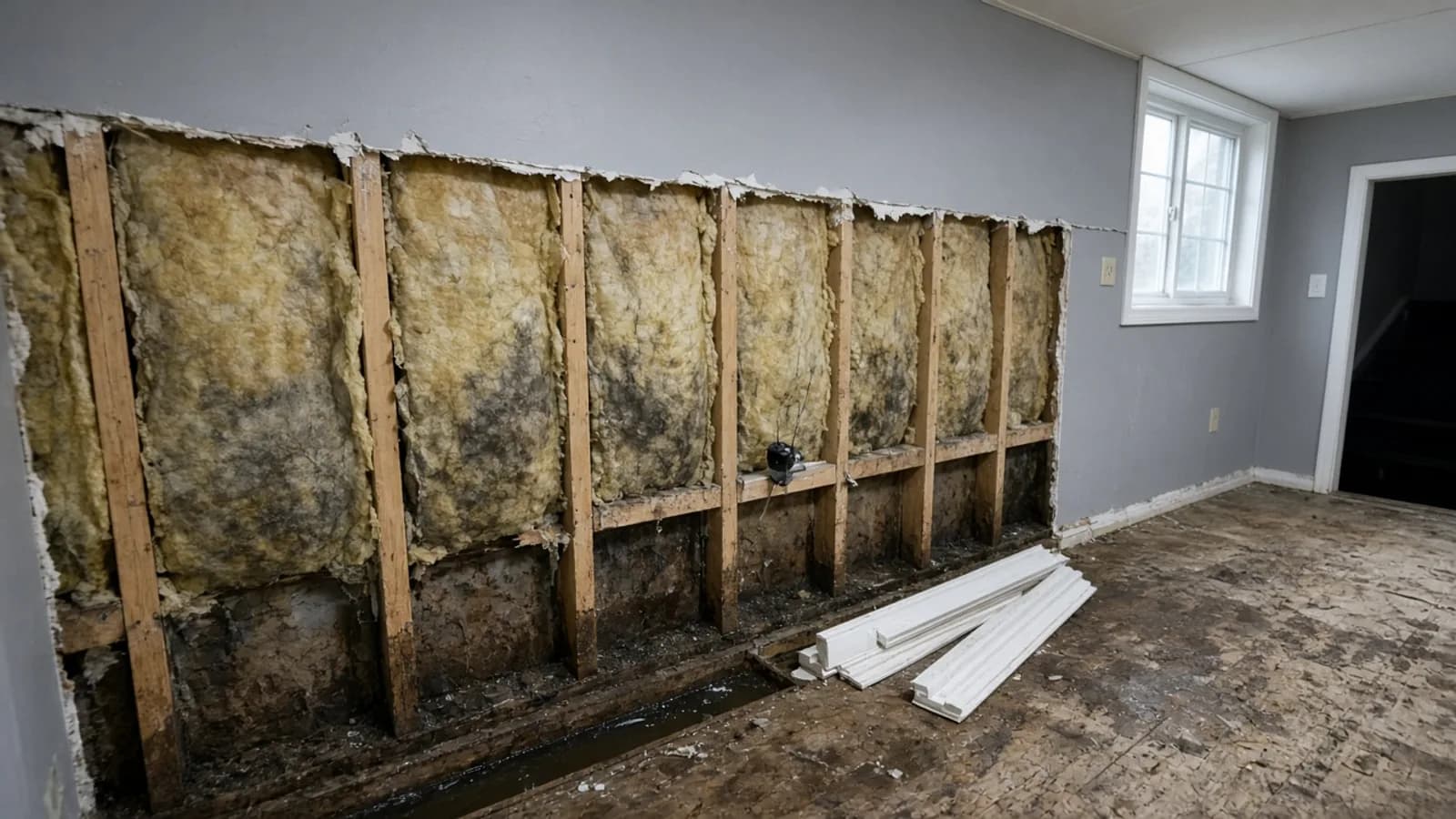
What almost always comes out
Carpet pad holds water against the floor. Once it is saturated, it does not dry in a reasonable time, and it smells if you try. The carpet on top of it usually goes with it. Laminate and a lot of click-together floors swell at the joints and do not go back down flat, so those sections come up too. Baseboard that sat in the water comes off so we can see the bottom of the wall. Leaving it on to 'save the trim' is how a wet cavity gets closed up.
If the water sat at the floor for hours, the lower drywall is next. Gypsum wicks upward. We cut high enough to reach dry board and to pull wet insulation, often around two feet, and higher if the meter says the water climbed. Wet fibreglass batts come out. They keep feeding moisture into the studs long after the room looks empty.
What we try to save
Wood studs and the bottom plate can usually stay if they are still sound and we can dry them in the open. A concrete slab is dried in place with air movers and an LGR dehumidifier. Drywall above the wet line stays when the face and the cavity read dry. We are not opening a whole wall because the baseboard got wet.
Clean water from a supply line, caught the same day, gives you the best chance of saving materials. Water that sat through a weekend, or water that came from a floor drain, a toilet, or the yard, does not. Sewage and flood water contaminate the paper face of drywall and the pad under the carpet. Those materials get removed and disposed of. Wiping them is not cleaning them.
How the rebuild is scoped
The scope is the moisture map, not a flat price from a photo of the stairs. We write down what came out, what is being dried, and what the readings were. That is the document an adjuster uses when the claim asks why the insulation is on the invoice and the studs are not.
New insulation, drywall, baseboard, and flooring go back only after the structure is dry. If you are standing in a Langley basement trying to decide what to throw away tonight, leave it until it is photographed and metered. Call 604-332-0886 and tell us how high the water got. That one detail decides most of the tear-out.